

How to build a European startup investor network (without a famous last name)
The first time I tried to raise a small angel round in Europe, I did what everyone does: I opened a spreadsheet, typed in the names of about 40 people I'd read about, and started sending cold emails. I got two replies. One was a polite no. The other asked me to "share the deck" and then vanished forever.
That round failed.
The round I closed a year later had almost nothing to do with that spreadsheet. It had to do with a specific structural feature of European investing that almost nobody explains to founders: capital here travels through networks of trust, not through directories of names. You don't build a European startup investor network by collecting contacts. You build it by inserting yourself into the right rooms, in the right country, at the right moment, and letting a small number of well-connected people vouch for you.
This is how I did it, what it cost me, and where I got it badly wrong.
Key Takeaways
- Europe is not one investor market. It's a patchwork of ~5 distinct clusters (DACH, Nordics, France, UK, Benelux) that barely talk to each other.
- Warm intros convert at 10–20x the rate of cold outreach — the single biggest lever you control.
- Public money (national banks, the European Investment Fund) is the most underused channel for first-time fundraisers.
- You need roughly 30–50 real relationships to reliably close 8–12 angels. Quality, not volume.
- Recurring events beat one-off conferences. The same faces, three times, becomes a relationship.
- Legal structure differences between countries decide which LPs can even invest in you. Sort that before you pitch.
Why European investor networks work differently from US ones
American startup advice assumes a single, liquid market where a warm intro can travel from San Francisco to New York in a week. Europe doesn't work like that.
An angel in Munich cares about who introduced you. An angel in Stockholm cares about whether another Nordic founder has already vouched for you. A French business angel, in many cases, cares about whether the deal fits a tax-efficient structure in France. These are not cultural stereotypes I'm reciting from a book — they're patterns I ran into repeatedly across two fundraising attempts and dozens of coffee meetings.
The trust filters you can't skip
European investors use three filters before they engage. Miss any of them and you'll get polite indifference.
- Who referred you. A cold email is noise. A forwarded email from someone they've co-invested with is a signal.
- Track record in the region. Not global fame. Regional credibility. Did you build something in their market?
- Deal fit. Ticket size, stage, and legal vehicle. If your SPV can't accommodate them, the meeting is over before it starts.
I spent four months on cold outreach. I spent six weeks on warm intros and closed the round. That ratio tells you everything.
Map the clusters before you map the people
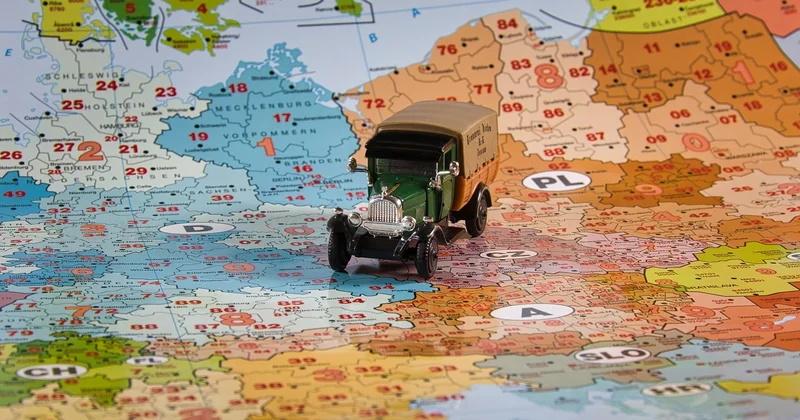
Most founders make the same mistake I made: they treat "European investors" as one list. They're not. The continent is a set of regional clusters, each with its own rhythm of events, its own public funding bodies, and its own legal quirks.
| Cluster | Anchor events | Public / institutional capital | What investors care about |
|---|---|---|---|
| Nordics (Helsinki, Stockholm, Copenhagen) | Slush (late November, Helsinki) | Nordic innovation agencies | Early-stage ambition, technical teams |
| DACH (Munich, Berlin, Zurich) | Bits & Pretzels (Munich, summer) | KfW, regional development banks | B2B, industrial depth, revenue |
| France (Paris, Lyon) | VivaTech (Paris, June) | Bpifrance | Deep tech, sovereign tech, structure |
| UK & Ireland (London, Dublin) | Sifted Summit (London, autumn) | Innovate UK | Scale, speed, global ambition |
| Benelux & Iberia | Web Summit (Lisbon, November) | National investment funds | Market access, lower entry prices |
Which cluster should you start with?
Start where your product already has a natural claim. If your first customers are German manufacturers, build your DACH network first. If your team is split between Paris and Lisbon, exploit both. The worst move is chasing the loudest hub on social media — usually London — when you have zero regional proof point. Investors sense that instantly.
I made exactly that error. I burned two months on London meetings where I had no traction and no local story. Meanwhile, three investors in the Netherlands who happened to know my first customer were ready to write checks. I found them by accident, six weeks too late.
Building a warm intro system that actually produces meetings
Here's the thing: you cannot manufacture trust, but you can engineer the conditions where it appears.
Start with the network you already have — all of it
Before you touch a single conference badge, list every person you already know who has any connection to capital: former colleagues, university contacts, customers who raised money, lawyers who work with startups, accountants who set up SPVs. In my case, my second-largest investor came through my former accountant. Not an investor. An accountant.
Ask each of them one specific question: "Who are the three investors in your country who would understand this business?" Not "do you know any investors." Specific asks produce specific intros.
Treat conferences as a recurring ritual, not a one-off
Attending Slush once is tourism. Attending it three years running, at the same side events, with the same 60 people, is a network. European investor circles are small enough that repetition matters more than reach.
Practical rule from my own experience: pick two anchor events per year, one in your home cluster and one in an adjacent one. Skip everything else. I tried the four-conference-a-year approach for one season and came out with 40 business cards and zero follow-ups.
The channel almost nobody uses: public and institutional capital
This is the biggest gap I see in the advice circulating online. National development banks and European institutions act as anchor LPs, and their presence legitimises your round in ways a private angel cannot. A business angel who sees a national bank or a European fund already committed tends to move faster. Do your homework on which national body fits your sector and stage. This is unglamorous. It works.
What legal and tax structure do European LPs actually need?
You can build the best network in Europe and still close nothing if your vehicle doesn't fit. This trips up founders constantly.

An angel investing personally in France, Germany, or a Nordic country faces different tax and reporting obligations. A family office may need a fund structure. A corporate investor may need a specific SPV. If your cap table instrument doesn't accommodate the investor's obligations, they'll pass — not because they dislike you, but because the paperwork makes the deal uneconomic.
Ask your lawyer, and ask early. I lost one committed investor because I'd set up a structure that made his tax situation messy. He was kind about it. It still cost me.
How many investors do you actually need in your network?
Fewer than you think. More than you'd like.
My working rule, tested over two rounds: you need 30 to 50 genuine relationships to reliably close 8 to 12 angel checks. The conversion isn't linear. Most of those 50 will never invest. But they'll refer. And referrals are what fill the round.
- Track every conversation in one place — not your inbox.
- Follow up with substance, not "just checking in." A new data point, a customer win, a hire.
- Give before you ask. Make an intro for them, first.
- Never pitch someone who hasn't asked. It kills the relationship before it starts.
What I got wrong, and what it cost
Two things, and they're worth naming because they're common.
First, I optimised for volume over depth. 400 cold emails, 2 replies. Then I switched to 15 deeply researched intros, and 11 of them took the meeting. The lesson: in Europe, one well-placed referral beats fifty cold approaches.
Second, I chased prestige over fit. I spent weeks trying to reach a well-known fund that was never going to invest in a company at my stage. Meanwhile, the investors who actually closed my round were people I'd met twice, in a mid-sized city, at a side event nobody was posting about.
The network you need is not the network that looks impressive on LinkedIn. It's the one that answers your email within 48 hours because someone they trust told them to.
Where to start tomorrow
Pick one cluster. Email three people you already know and ask for one specific introduction each. Book one recurring event for the next cycle and commit to attending it twice in a row. And call your lawyer about structure before you call a single investor.
The founders who build real European networks aren't the most connected. They're the most patient about the boring parts — repetition, follow-up, and staying in the same rooms long enough for someone to remember their name.
Which cluster are you actually positioned to win? That's the only question that matters, and it's the one most people skip.


